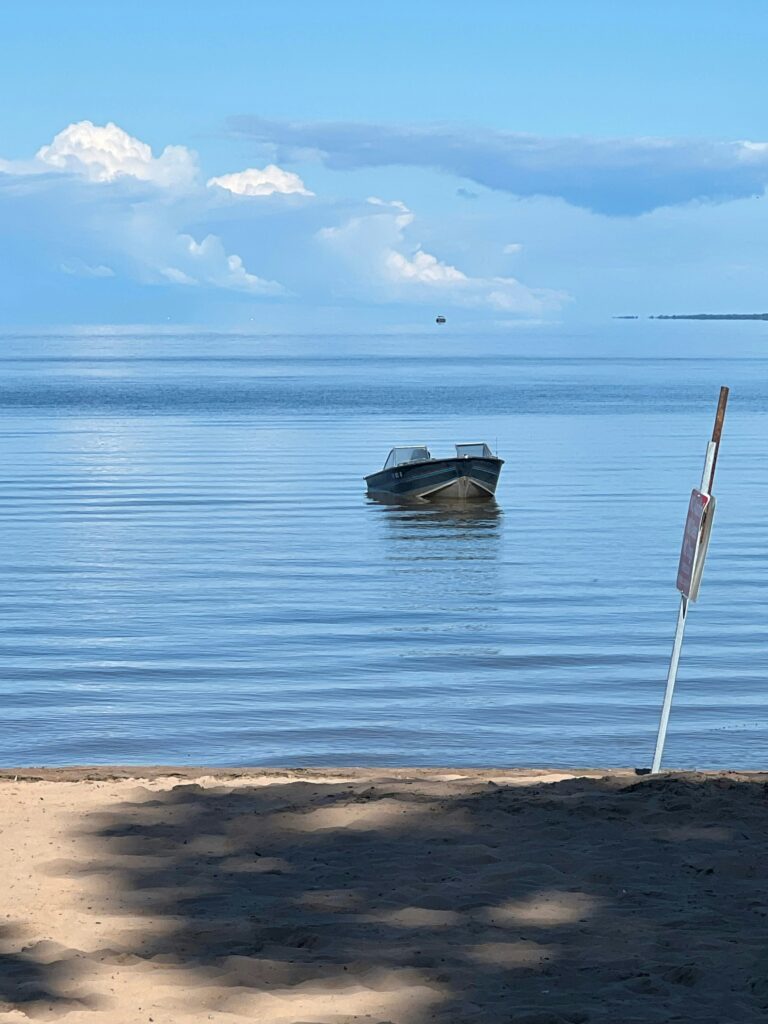



Every morning, Elara dipped her fingers into the River Lys. She did not pray. She measured. Her fingertips, calloused and sensitive as any instrument, would gauge the water’s temperature, its silt content, the subtle, vital pull of its current. Then she would walk to the village cistern at the heart of Alder’s Hollow and carve a single symbol onto its stone lip: a circle for plentiful, a slash for sufficient, a cross for scarce.
For generations, this had been the Lys-Keeper’s role. They were not leaders, but living sensors. The village council interpreted the marks and decided rationing. Elara’s grandmother had been Keeper, and her mother before her. It was a quiet, sacred duty. But it was also passive. For three seasons, Elara had been carving crosses.
Drought had clamped its fist around the valley. The Lys, their lifeblood, had dwindled from a robust flow to a listless trickle, warm as bathwater. The council’s response was stricter rationing, pleas for rain, and a grim acceptance. “The river gives, and the river takes,” Elder Bran would intone, his voice heavy with a melancholy pride. They were enduring, as they always had. But Elara, whose whole being was tuned to the water, felt a different truth. This wasn’t just taking; it was a dying. And watching wasn’t enough.
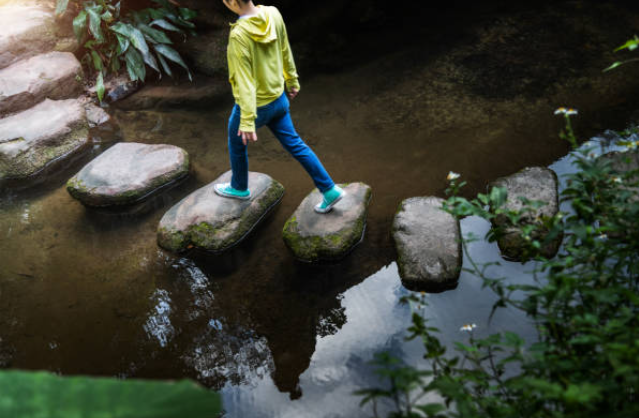
The knowledge had begun with a memory. As a child, she’d found a forgotten scroll in the Keeper’s cottage, brittle with age. It spoke not just of measuring the Lys, but of understanding its song. It mentioned the “High Source,” a spring in the cracked, volcanic uplands where the river was born. The scroll suggested the source could be nurtured, its song strengthened. The idea was deemed mystical folly by practical farmers and was forgotten. Now, with despair lapping at the village walls, the folly was all Elara had. She announced her plan at the council fire. “The drought isn’t just happening to us. The river is sick at its source. I’m going to the High Source to see if I can help it.”
The silence was broken by snorts of derision. Elder Bran shook his head. “The uplands are barren stone, girl. A day’s hard journey for a fairy tale. Your duty is here, to mark the truth, not chase shadows.” “Marking the truth isn’t changing it,” Elara said, her voice quiet but clear in the crackling silence. She held up her marking hand. “I can carve crosses until this hand is bone. Or I can try to make a circle.”
She left at dawn, alone. The path to the uplands was a forgotten scratch on the map, overgrown with thorn and despair. The air grew thin and sharp. Below, Alder’s Hollow was a smudge of green shrinking in a bowl of brown. Here, the world was stone great, shattered plates of granite thrust toward a merciless sky. The silence was absolute, a physical weight. For two days, she found nothing but dust and thirst. Her water skin dwindled. The scroll’s directions were poetic and vague: “Where the dragon’s bones cradle the sky’s tear.” It was madness. On the morning of the third day, her lips cracked and her hope bleached white, she sank to her knees in a hollow of rock. This was it. A quiet, stupid end.
As she sat, defeated, she placed her palms flat on the stone. Not in ritual, but in exhaustion. And she felt it. A vibration. Faint, deep, and rhythmic. A hum from the very bones of the mountain. She scrambled up, following the tremor with her hands like a blind woman. It led her to a fissure, a dark, narrow crack in a wall of basalt that looked no different from a hundred others. But the hum was stronger here, a subterranean song. And there, at its base, was the dragon’s bone a curved, fossilized rib of some ancient beast. And cradled within its stony curve, a single, perfect bead of water welled from the rock, hung gleaming for a moment, and fell with a soft plink into a shallow, muddy basin no larger than her hand. The High Source. Not a roaring spring, but a heartbeat. A tear. It was almost dry. The mud was thickening. The bead formed with agonizing slowness. The song was fading. Elara understood with a jolt. The source wasn’t dead; it was clogged. Ages of mineral deposit and fallen debris were slowly strangling it.
This was not a task for magic. It was a task for care. She spent the rest of that day with infinite patience. Using a sharp stone and her own small water brush, she began to clean. She picked away grains of sediment. She gently widened the minute channel where the water emerged. She cleared the basin of thickening silt. It was painstaking, microscopic work. She had no idea if it would make any difference at all.

She worked until the light failed. She slept curled by the fissure, lulled by the deep, soft hum. At first light, she opened her eyes and looked. A steady, slender thread of water was now trickling from the cleft. It filled the small basin and began to spill over, tracing a dark path down the face of the rock. It was not a flood. It was a whisper. But it was a confident one.
The journey back was a blur of exhausted triumph. She reached the village edge as the evening star appeared. Without a word to anyone, she walked to the cistern. She dipped her fingers in. The water was cooler. It held a new, fresh scent of stone and depth. She took her carving tool and, with a hand trembling not from weakness but from a fierce, quiet joy, she etched a single, deep, perfect circle onto the stone. The next morning, the village awoke to the sound of disbelief. The cistern’s level, for the first time in a year, had risen. Not by much, but by a finger’s width. Clear, cold water. Elder Bran found her at the river’s edge, her hands again in the flow. “What did you do?” he asked, his voice hushed.
“I listened,” Elara said. “And then I did the small, hard thing right in front of me.” The drought did not break that day, or that week. But the crosses stopped. The circles returned. Elara organized teams, not to ration, but to tend. They cleared the river’s choked banks farther downstream. They planted drought-resistant roots to hold the soil. They learned the river’s song all along its length. Alder’s Hollow did not just survive. It learned. The role of Lys-Keeper was not erased; it was transformed. Elara still made her marks, but now she also taught others to listen, to feel, to mend.

The inspiration was not in a miraculous deluge, but in a single, stubborn bead of water, and the choice to care for it. It was the understanding that the most profound changes often begin not with grand gestures, but with getting on your knees, in the dust, and clearing away one grain of sand at a time. The weight of water, they learned, was not just in its volume, but in its persistence, and in the human will to join its song.