

The relentless sun beat down on the corrugated iron roof of the tiny shack in the lower shire district of Nsanje where Patrick Malambo grew up. He could taste the brackish water of the lagoon in the air, mixed with the scent of smoked fish and woodfire. Patrick’s world was defined by waterlogged planks, the constant gentle rocking of the house on stilts, and his father’s weary smile, revealing a mouthful of teeth stained dark brown by years of chewing sugarcane and eroded by pain.
Patrick was a sugarcane seller. His shop was a wooden cart piled high with stalks, which he peddled through the dusty streets of Malaka. His smile was his advertisement, but it was also a source of secret shame. When Patrick was ten, a well-dressed woman with a child pointed at his father and whispered, too loud, “See that man’s teeth! Don’t ever eat too much sugar.” The child had stared, wide-eyed. Patrick’s father’s smile had frozen, then slowly faded, replaced by a grimace of something deeper than physical pain. That moment etched itself onto Patrick’s heart. The link between poverty, sugar, and shame became a tangible knot in his stomach.
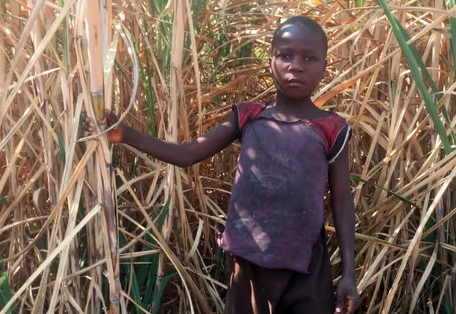
Their life was a cycle of relentless work. Patrick’s mornings began before dawn, helping his mother clean their two-room home and pack his father’s cart. After school, he’d join his father, not to sell, but to collect the discarded sugarcane husks. He’d watch as men and women, rich and poor, gnawed on the sweet stalks. He began to notice their teeth were stained, chipped, and often missing teeth of the market traders versus the bright, uniform smiles of the occasional foreigner from Mozambique who seek refugee away from their war-torn home country.
The turning point came when Patrick’s toothache escalated into an unbearable, face-swelling agony. The local herbalist’s potions did nothing. The money saved for Patrick’s school fees was pulled from its hiding place in a tin can, and they went to a public dental clinic. The waiting room was a theatre of silent suffering. When it was his father’s turn, Patrick peeked through the door.
He saw not a magician, but a calm woman in a white coat wielding small, precise instruments. With quiet efficiency, she ended his father’s pain. She then did something unexpected: she showed his father a small mirror, explaining simply how to better care for his remaining teeth. The relief on Patrick’s face was transformative. It wasn’t just the end of pain; it was the restoration of dignity.
“Patrick,” his father rasped on the way home, his cheek still numb, “that doctor… she is an angel. To take away pain like that it is a powerful thing.” A seed was planted. In Patrick’s young mind, dentistry stopped being about shiny teeth for the rich. It became about the alleviation of suffering, the erasure of shame, the return of a confident smile. He announced at dinner, “I will be a tooth doctor.”
His mother, a pragmatic fish-seller, patted his hand. “It takes many, many years of school, my son. And money we do not have.”But the seed had roots. Patrick’s academic focus, once scattered, became laser-sharp. He devoured his science books. He became the phenomenon of Malaka community School, the boy who studied under kerosene lamp light while mosquitoes buzzed, his textbooks wrapped in plastic to protect them from the humid air. His teachers noticed.
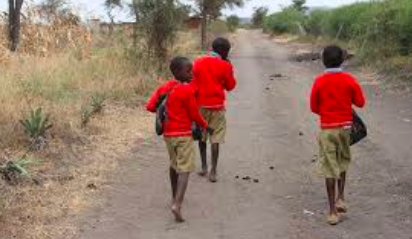
His headmaster, Mr. Chimkondenji, became his first mentor. “The path is steep, Patrick,” Mr. Chimkondenji told him, looking over Patrick’s perfect senior secondary exam results. “You need a scholarship. For that, you need to be not just good, but exceptional.”
Patrick was exceptional. He earned a full government scholarship to a prestigious boarding school outside Lagos. Leaving Makoko was a seismic shift. For the first time, he had uninterrupted electricity, a library, and classmates whose parents were engineers and bankers. He felt like an imposter in his second-hand uniform. The cultural gap was a chasm he crossed word by word, book by book. He was mocked quietly for his rusty English, for his amazement at a science lab. He called home every Sunday, the sound of lagoon water in his mother’s voice his anchor.
“Remember why you are there,” his father would say, the gaps in his own smile now filled with cheap, functional dentures. “Remember the pain.” Patrick remembered. He aced his West African Senior School Certificate Examination, scoring straight A’s in Biology, Chemistry, and Physics.
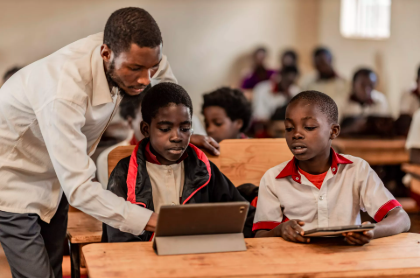
The scholarship continued to the University of Malawi, College of Medicine currently Kamuzu University of Health Sciences (KUHES). The dream seemed within reach. But medicine was a different beast. The sheer volume of information was overwhelming. The first time he failed a major biochemistry test, he sat on his bunk in the crowded dorm, the paper shaking in his hands, thinking he had reached his limit. The scholarship was contingent on maintaining a high GPA. One more failure could send him back to Malaka.
He wanted to quit. He called home, ready to admit defeat. His mother listened, then said, “Patrick, your father is at the cart. His knees hurt, the sun is hot, but he is there. Is your book hotter than the Lagos sun? Is your pen heavier than his sugarcane?”
Shame burned hotter than failure. Patrick sought help. He formed a study group with two other determined students from humble backgrounds, Chifundo and Amina. They became a trinity of mutual support, pooling their meager resources, quizzing each other until dawn. Patrick started volunteering at the university’s dental clinic, observing, sterilizing instruments, watching the dentists work. The hands-on reality reaffirmed his mission.
The six-year dental surgery program was a marathon of anatomy, pharmacology, and clinical practice. Patrick’s hands, once used to hauling sugarcane husks, learned a new dexterity. He practiced fillings on plastic teeth, then on extracted ones, his focus absolute. His defining moment came during his final-year clinical rotation. He was assigned a little boy, terrified, from a neighborhood much like Malaka. Patrick didn’t just see a procedure; he saw himself twenty years prior.
He knelt down, eye-level with the boy, and spoke softly, not about the needle, but about superheroes and how strong the boy was. He explained every step. The extraction was flawless. Afterward, the boy, through tears, gave him a wobbly smile. Patrick felt a surge of purpose so powerful it left him breathless.
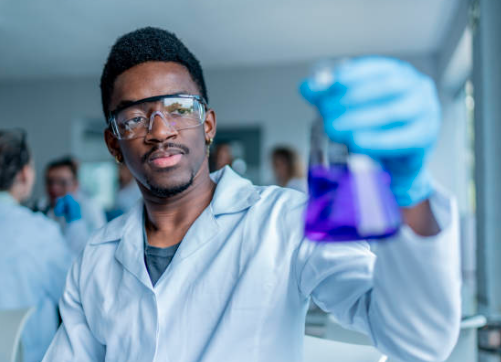
Graduation day was a storm of emotion. His parents, in clothes carefully saved for for a year, sat in the audience, his mother weeping quietly, his father’s chest puffed out with a pride that seemed to mend every past hardship. As Dr. Patrick Malambo walked across the stage, the weight of the scroll in his hand felt like the weight of his entire community’s hopes. He had arrived. But he was not yet a hero.
He completed his mandatory national service not in a comfortable city hospital, but by requesting a posting to a rural clinic in Chilomo. His colleagues thought him mad. But Patrick knew that if he was only serving the easy-to-reach, he was betraying his own origin story. In the rural clinic, he faced staggering need neglected dental diseases, limited equipment, and deep-seated fear of dental work.
He became part dentist, part teacher, traveling to local schools to teach brushing techniques, using posters translated into Hausa. His heroism wasn’t in a single grand gesture, but in a thousand small ones. The elderly woman who could finally eat solid food without pain after he crafted her a set of dentures. The teenage girl whose congenital tooth defect he corrected, allowing her to smile openly for her graduation photo. The farmers he taught about the link between tobacco, kola nut, and oral cancer.
After his service, with experience and a fierce reputation, Patrick returned to Malaka. But he didn’t open a sleek practice. He opened “The Malambo Dental Clinic” in a middle-income suburb, making quality care accessible. He instituted a sliding scale fee system and dedicated every Friday to free treatments for children from communities like Malaka.
The story of Dr. Patrick Malambo, the Sugarcane Dentist, began to spread. He was featured in blog not for his wealth, but for his philosophy: “Oral health is not a luxury; it is a pillar of dignity.” One slow Tuesday afternoon, an older man walked in, well-dressed but hesitant. It was Papa Obasi. He wasn’t in pain. He sat in the very chair his son owned, in the clinic his son had built.
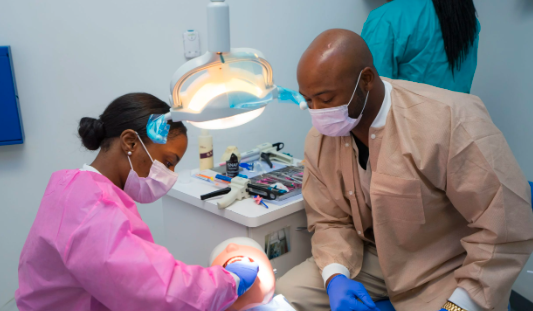
His father looked around at the clean, modern clinic, at the framed degrees on the wall, at his son in the white coat. Tears welled in his eyes. “I just wanted to see you,” he said, his voice thick. “I just wanted to sit here and see the angel my son has become.” Patrick’s journey from zero, from the waterlogged poverty of Malaka, where a smile could be a source of shame to hero was complete.
His heroism wasn’t measured in wealth or fame, but in the thousands of confident smiles he restored, in breaking the cycle of pain and shame he had witnessed as a boy. He had not just become a dentist; he had become a healer of wounds both physical and social, proving that the strongest foundations for a better future are often laid in the most humble of places.